
Syed Jamaluddin Afghani
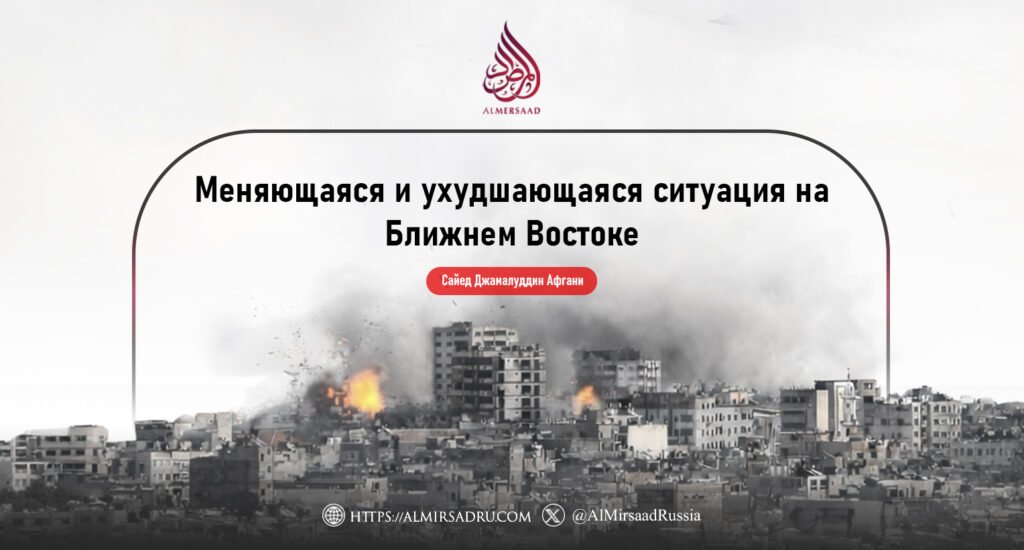
The triangular conflict between Iran, Israel and the United States has entered an unusual phase. US President Donald Trump has been faced with an unusual and unprecedented situation from the very beginning of this confrontation.
Israel’s situation, although not entirely catastrophic, looks as if its heart has reached its throat, and the country is deeply anxious and seriously concerned.
Regarding the situation in Iran, the American and Western media, as well as their allied regional media, have been reporting for a long time about supposedly major changes coming. Against the background of all these events, however, the most striking and worrying is the situation of the Arab states of the Persian Gulf, a situation which seems completely unexpected and probably one that the Arabs themselves could hardly ever imagine.
In fact, in this conflict, the United States either proceeded from a belief or was convinced that several airstrikes were possible two or four can completely destroy Iran. It was assumed that such strikes would cause chaos and panic among the population, people would begin to think about fleeing the country, and serious unrest would arise at borders and airports.
On the other hand, Israel held the same belief and had certain grounds for its confidence. Just a few days earlier, the situation inside Iran itself gave similar signals. In addition, reports of violence by the Iranian government against protesters made it easy to understand why Israel showed such confidence.
It was assumed that when Israel and the US strike Iran, protesters who had defied the Iranian government two months earlier and were subsequently suppressed would rise again. They were to act on the spot as supporters of Israel, increasing pressure on the Iranian government, and within a few days the current regime in Iran was to give way to a new one.
To achieve this goal, the United States and Israel, in their first strike, planned to hit Iran’s supreme religious leader and most influential figure, Khamenei, hoping that his removal would destroy the main pillar of the regime and the biggest obstacle to US-Israeli plans. It was assumed that after its elimination, a large-scale popular uprising would break out, which would quickly make it possible to implement the plans.
However, a truly shocking surprise for Israel, the United States and even the whole world was that, despite the attacks, protests did not break out in the country and internal traitors did not appear. Even after the removal of the Supreme Leader, although the world felt the resulting vacuum, a new, unusual and unpredictable situation also arose.
The intensity that was expected to be seen as a result of the removal of the Supreme Leader, on the contrary, increased many times after his departure. Israel and the United States expected to change the regime within two days or, in extreme cases, within a week and announce the achievement of their goals. However, more than two weeks have passed, and many attempts by Israel and the United States to exert pressure have been unsuccessful.
Public places and other areas were subjected to brutal and merciless bombing, but Iran did not experience the changes they expected. If any changes have occurred, it is only that people who previously opposed the Iranian regime have now become its supporters. Those who used to feel even the slightest satisfaction at the thought of betrayal now feel a deep aversion to it. Previously, Iran relied heavily on ballistic missiles, but now it uses various forms of destruction that no one could have imagined before.
In the past, Iran’s response has been relatively slow and limited, amounting only to launching missiles towards Israel. Now he is striking American military bases throughout the region and has actually disrupted their functioning. The lights at each base are plunged into darkness due to these attacks. In every country where US troops have had a military base or facility, Iran strikes them heavily and continuously, causing serious damage.
On the other hand, Iran announced the closure of export routes through the Persian Gulf leading to the rest of the world, especially oil and gas supply routes. Taking control of the Strait of Hormuz, he openly declared that any ship attempting to pass this route would be finally sunk. This statement caused serious confusion and concern around the world. Oil and gas prices in the region have risen sharply, and the consequences of this are clearly felt even in Europe.
Using its missiles, Iran carries out powerful strikes not only on American military bases and embassies, but also on combat aircraft operating in the region, as well as support aircraft. To date, several aircraft have already been damaged. In short, the changes that Israel and the United States sought never happened; however, Iran has created a situation whose consequences are beginning to be felt from East to West.
The most alarming aspect of this war is the situation of the Arab countries, which for almost thirty-five– forty years have stationed American military bases on their territory. The United States has invested billions of dollars in these bases, much of which was provided by the Arabs themselves.
The primary purpose of these bases was for American forces to provide security for Arab states.
However, Iran is now striking these bases and the American troops stationed there every day.
If one missile heads toward Israel, several others fly over Arab airspace, experts say, casting doubt on the prestige and strength that the U.S. troop presence was believed to provide.
Prince Turki al-Faisal is a famous figure for many years, she headed the Ministry of Foreign Affairs and intelligence structures of Saudi Arabia and has given several interviews in recent days. In them, he openly admits that American troops, which Arab countries accepted in the hope of protection, have now become a source of serious problems.
Experts also note that these bases not only directed Iranian missiles towards Arab countries, but also played an important role in closing the Strait of Hormuz.
The entire economy of Arab countries depends on oil and gas.
If the transportation of these resources abroad is blocked, their economic life will be destroyed. For Saudi Arabia, the continuous expansion of oil pipelines to find new export routes towards the Red Sea has been a significant achievement in recent years. However, Iran has now begun to signal that the Bab al-Mandeb Strait is also located near areas influenced by the «Ansar Allah» movement in Yemen and that its closure could happen at any moment.
As a result, the Gulf countries today face serious pressure and anxiety. In fact, American military bases, which were originally created to ensure security, are now perceived as unique «targets» sources of threats and problems. This conflict has already led to numerous short-term changes. The oil and gas crisis has disrupted stability in both Europe and Asia.
Iranian missiles, like birds, fly in all directions and hit precise American and Israeli targets at the regional level.
But what will be the long-term outcome of this war? Experts believe Iran’s strikes on Arab countries, the closure of the Strait of Hormuz and the blocking of European imports are aimed at putting pressure on the United States to accept Iran’s limited demands, thereby forcing an end to the conflict.
The reality is this, that Iran is dragging the United States into a trap in a very simple and cost-effective way. A clash with Iran is extremely costly for the United States, and one thing is clear: until the United States steps onto Iranian soil, it cannot seriously count on victory.
However, recently the United States has already experienced a ground invasion of Afghanistan, where it was supported by other countries and even NATO forces.
Nevertheless, the result was only humiliation and disappointment. Arab countries were among those states that supported the United States; Without their help, America would be almost on the verge of bankruptcy. For this reason, the United States does not currently dare to take such a step towards Iran. The most they can handle is a few weeks of fighting, after which their morale can collapse, forcing them to retreat.
However, one of the most important consequences of this war for the Arab region was the destruction of the previous idea that that they are helpless before the United States and that the security of American bases is guaranteed.
Now they themselves have to decide how they will build further relations with the United States and with military bases located on their territory.